
My dog, Bindi, has traveled with us through more than 20 countries. She's gone wine tasting in France, taken overnight ferries between Italy and Greece, explored the streets of Istanbul, and joined us on more road trips than I can count.
At this point, bringing her along is just part of how we travel.
When we first started, I assumed traveling Europe with a dog would be much more complicated than it actually is. I thought we'd struggle to find nice places to stay, that transportation would be difficult, and that we'd constantly have to leave Bindi behind to actually do anything.
There are definitely a few more logistics involved, and some destinations are much easier than others, but overall, traveling around Europe with a dog has been surprisingly manageable.
After years of doing it, and making a few mistakes along the way, these are the things I'd want to know if I were planning my first trip to Europe with a dog.
What Documents Do You Need to Travel Europe With a Dog?
The first thing to figure out is the paperwork.
I'm not a veterinarian, and pet travel requirements can change, so I always recommend checking directly with your vet and the official government authorities for the countries you're visiting.
For most of our trips around the EU, Bindi is microchipped, up to date on her required vaccines, and travels with an EU pet passport. Some countries have additional requirements or treatments, so this is one part of trip planning I would never rely on potentially outdated information for.
Your vet and official government websites are the best sources of information for this.
Which European Countries Are Most Dog-Friendly?
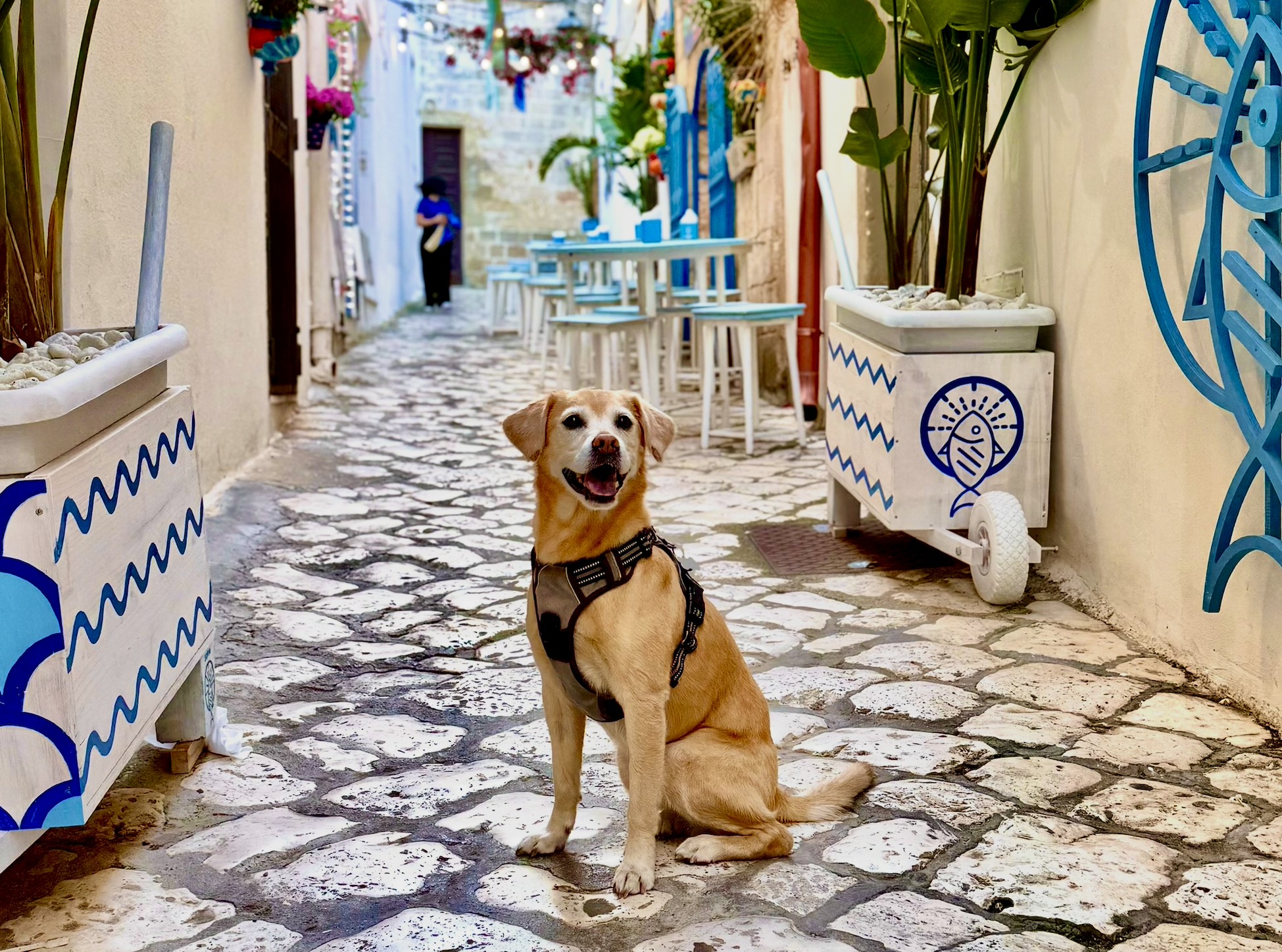
One thing I've learned is that there really isn't one answer to the question, "Is Europe dog-friendly?" Some countries are incredibly easy with a dog. Others require a bit more planning. The countries where we've personally had the easiest time traveling with Bindi are:
- France
- Italy
- England
- The Netherlands
- Czechia
France and Italy are probably my favorites. In both countries, having Bindi with us rarely changes our day very much. We've taken her into shops and restaurants, used public transportation with her, and generally found that people are extremely welcoming toward dogs. Honestly, sometimes I think we get better service in these places when Bindi is with us.
On the other hand, we've personally found Spain, Portugal, Bulgaria, and Romania a little more difficult. Spain has probably been the hardest, particularly Catalonia. While dining indoors with a dog in Spain is almost never allowed, we were even once denied a table on an outdoor restaurant terrace in Barcelona because we had Bindi with us. That doesn't mean I wouldn't travel to any of those places with a dog; I just wouldn't assume your dog will be able to come everywhere with you.
Traveling With a Dog in Greece and Türkiye
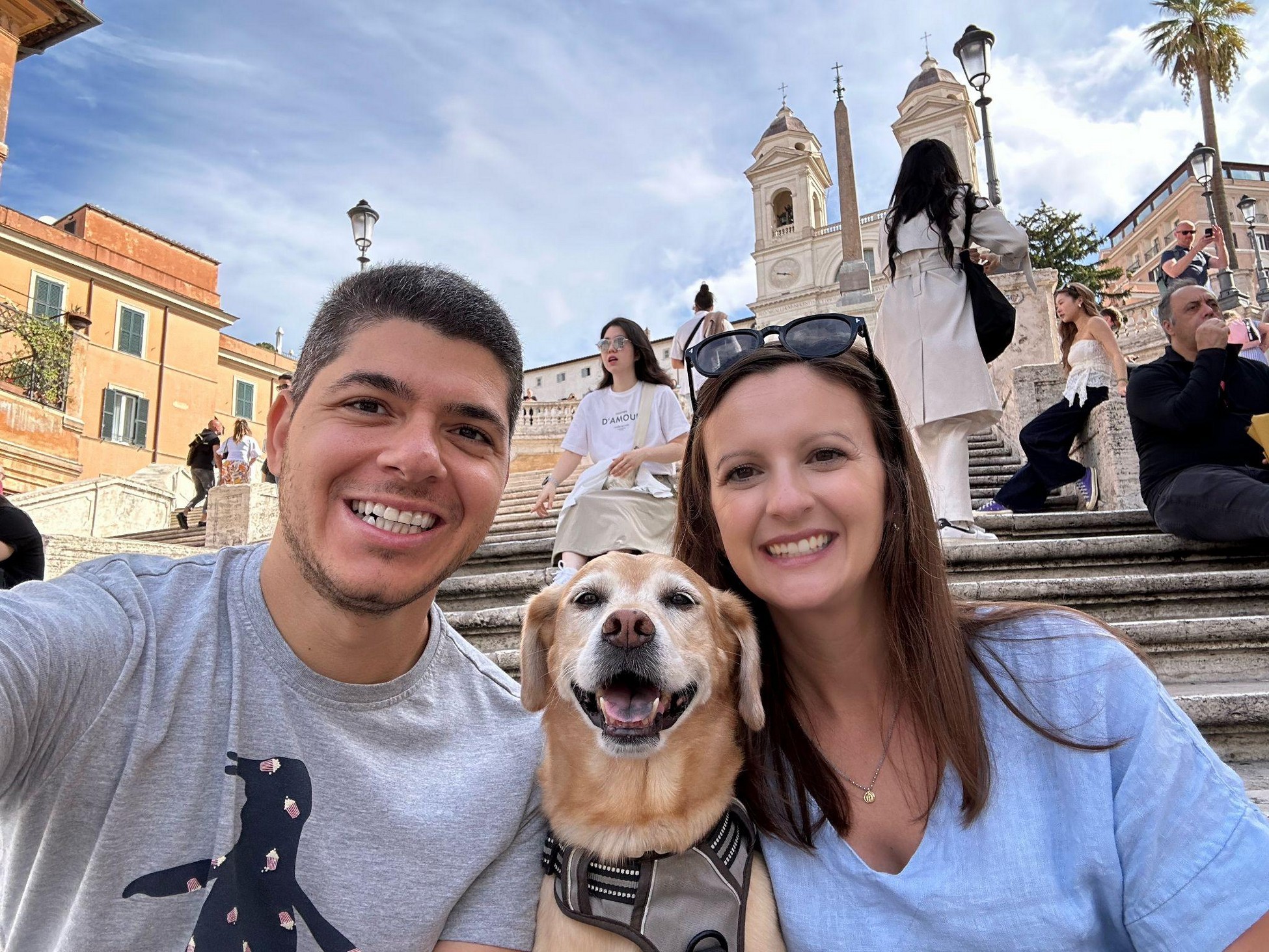
We've also spent quite a bit of time traveling around Greece and Türkiye with Bindi, and overall we've found both countries very dog-friendly, but you do have to be aware of the presence of strays. You'll see them in both countries, but especially in Türkiye. Most of the stray dogs we've encountered have been completely harmless, but some can be territorial. If your dog tends to react to other dogs, it's something I'd keep in mind when deciding where to walk or stay.
How to Find Dog-Friendly Hotels in Europe
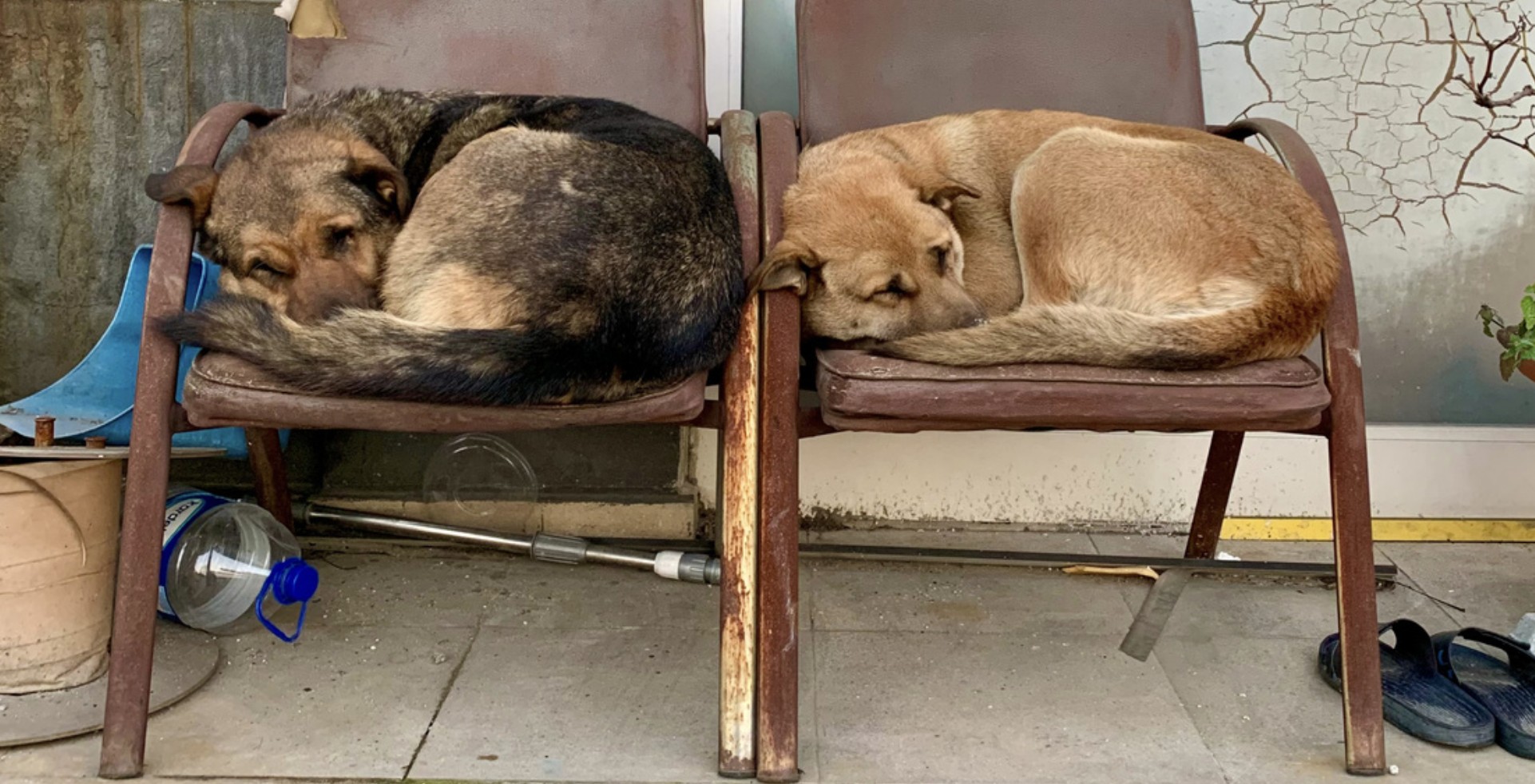
Finding dog-friendly accommodation in Europe has been much easier than I originally expected. Before we started traveling with Bindi, I assumed that limiting ourselves to pet-friendly hotels would mean having to compromise on where we stayed, but that really hasn't been the case. We've stayed in some beautiful hotels and apartments all over Europe with her. The bigger decision for us is usually whether a hotel or an apartment makes more sense for that particular trip.

Hotel or Apartment: Which Is Better With a Dog?
I usually only choose a hotel when I know Bindi will be able to come almost everywhere with us.
A lot of hotels don't allow dogs to be left alone in the room (and that's not great to do anyway), so if we're planning to visit museums, have long dinners, or do something where she can't join, a hotel usually isn't the best option.
Hotels can also be noisy. There are people walking through hallways, doors opening and closing, housekeeping carts, elevators, and lots of unfamiliar sounds, which is worth considering if your dog is sensitive to noise.

An apartment usually works better for us when we know Bindi will occasionally need to stay behind. She has more space, there's generally less hallway noise, and it feels a little more like home. We also set up a small camera that connects to our phones so we can check on her if we leave her alone for a bit.
Apartments can also be better for larger dogs, or if you're staying somewhere for more than a few nights.
The downside is mostly cleaning. Bindi sheds enough hair to create another dog, so depending on how much she's shedding, we've occasionally vacuumed before checking out.

Always Confirm That Your Dog Is Allowed
Even if a hotel or apartment is listed as pet-friendly, I never assume Bindi is automatically allowed. Some properties have weight limits, some limit the number of pets, some only allow dogs in certain room categories, and some charge an additional pet fee.
Whenever possible, I book directly with the property and then send a quick message after I make the reservation. Usually something like:
Hello, I've booked a stay on [date]. My reservation number is [X]. I just want to confirm that I will have my 15kg/33lb dog with me.
It takes almost no time and means there are no surprises when we arrive. More importantly, I have written confirmation that the hotel knows we're bringing a dog.
One hotel group I tend to check early in my search is Accor. We've stayed in a number of their dog-friendly properties, and their pet fees have usually been pretty reasonable. Some hotels have even given Bindi treats or toys when we checked in.
Dog-Friendly Things to Do in Europe
One of the things I worried about most when we first started traveling with Bindi was whether we'd actually be able to do anything with her, but in reality, she hasn't been very limiting.
There are obviously some activities where dogs generally aren't allowed. Museums, sporting events, government buildings, and cooking classes are usually difficult, but there are plenty of things that you can do and bring your dog along with you.
Walking Tours
Walking tours are one of my favorite activities to do with Bindi. We get to explore the city, and she gets a long walk at the same time. The only issue is that she occasionally gets more attention than the tour guide.
We do walking tours in almost every city we visit, and I've only once encountered a walking tour that didn't allow Bindi to join, so these are a pretty safe bet.

Wineries
Bindi has joined us on quite a few vineyard and wine tasting visits. Every place is different, and you should definitely check in advance, but in our experience, dogs are often allowed during wine tastings, although tours of production areas often have different rules.
If the winery is on a farm or rural property, I always ask before we go because they might have their own dogs or other animals wandering around.
Beaches
Beaches take a little bit more research. Some beaches allow dogs year-round. Others ban them during the summer season but allow them during the off-season. Some have designated dog-friendly sections. And sometimes a private beach club will allow dogs even when the nearby public beach doesn't.
France is a particularly good destination if you want to head to the beach with your dog; we've found several dog-friendly beaches along the French Riviera. We've also easily taken Bindi to the beach in many areas of Italy and Türkiye.
When in doubt, I usually try to ask a local what the rules are. And most importantly, always pick up after your dog.
How to Travel Around Europe With a Dog
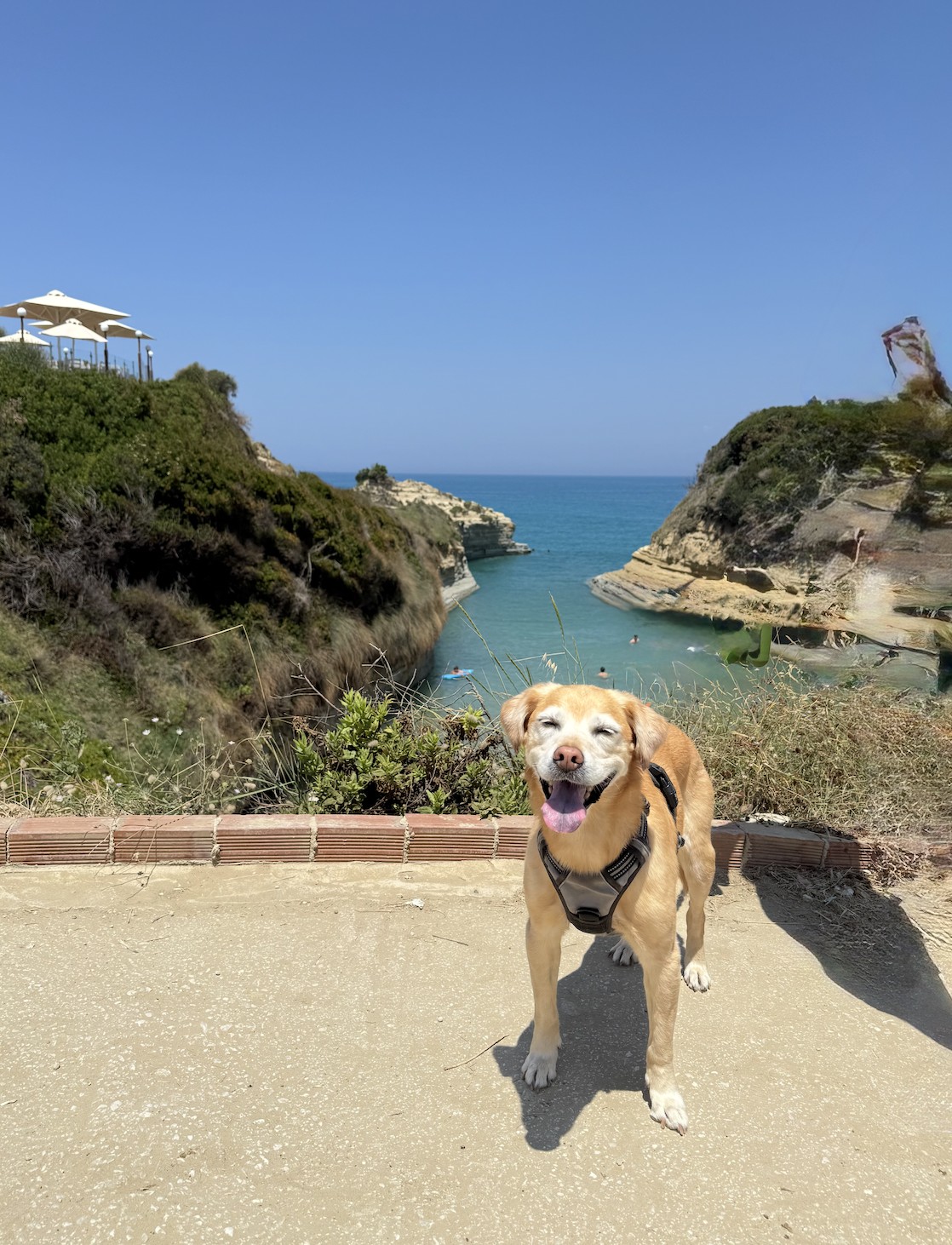
We've traveled with Bindi by plane, train, ferry, car, public transportation, and taxi. By far, some options are easier than others.
Flying With a Dog
Bindi flew from the US to the UK when we first moved to Europe, and I never want to do that again. Obviously there are situations where flying with a dog is unavoidable, particularly if you're crossing an ocean, but I found the whole process incredibly stressful. There's a lot of paperwork, airline rules, and things that feel outside of your control.
Taking Trains With a Dog in Europe
Train travel is generally pretty easy. The most difficult part is honestly managing your luggage, the dog, and yourself at the same time. While many trains within Europe allow dogs, different train companies have their own pet policies, and some require you to buy a separate ticket for your dog, so I always check directly with the operator. Some also require that your dog wear a muzzle while traveling, so be sure to have one with you just in case.
Taking Ferries With a Dog
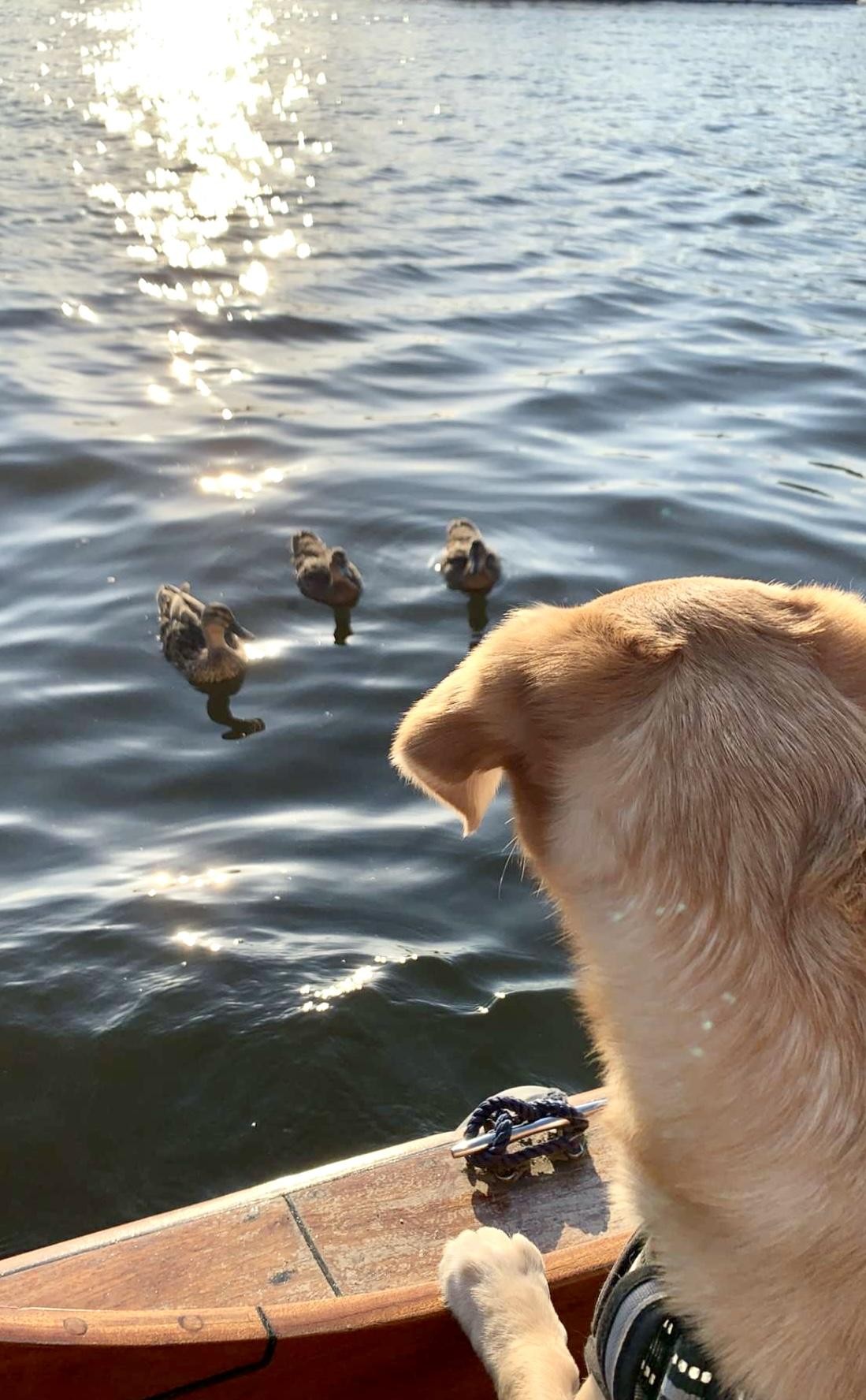
Ferries have actually become one of my favorite ways to travel with Bindi. We've taken Grimaldi Lines between Italy and Greece several times and always book a pet-friendly cabin. Despite some of the less-than-great reviews you'll find online, our experiences have always been fine. Bindi has space in the cabin, there's a small toilet area for dogs, and no one seems particularly bothered about having a dog around. Our experience on Corsica Ferries was pretty similar. We've also taken plenty of shorter ferries around Greece and Türkiye without any major issues; the main concern is that some require dogs to be muzzled for the duration of the journey.
Road Trips With a Dog
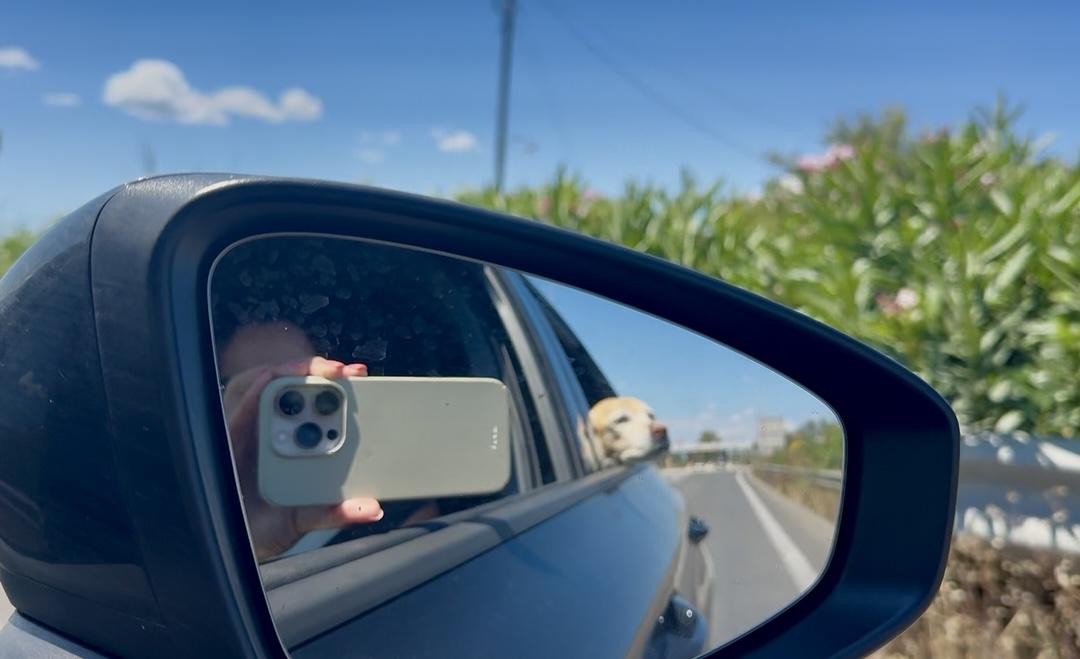
Driving is probably the easiest way to travel Europe with a dog. You're on your own schedule, you can stop whenever your dog needs water or a bathroom break, and you don't have to worry about another company's pet rules. It also means I can bring Bindi's bed, food, cooling pad, towels, toys, and everything else without attempting to drag it all through a train station. For longer trips around Europe, traveling by car is usually my preferred option.
Public Transportation and Taxis With a Dog
Once we arrive somewhere, we walk as much as possible.
It's good for us, good for Bindi, and walking is usually my favorite way to explore a city anyway.
When we need public transportation, I check the rules for the specific city. Some places require dogs to wear a muzzle or have a separate ticket. Others have very few restrictions. It's also good to make sure the station has stairs or an elevator, as dogs should not use escalators.
If public transportation isn't convenient, we usually check for Uber Pet or Bolt Pet, and we've had pretty good luck with both. Local taxis may also accept dogs, but this tends to be up to the individual driver.
The Most Important Rule: Never Assume
If there's one thing I've learned after years of traveling Europe with a dog, it's to never just assume things will be fine when traveling with a dog; always do your research.
A country can be very dog-friendly while a specific train operator has strict rules; a hotel can say it's pet-friendly but only accept dogs under a certain weight; a ferry company can have different pet policies depending on the route.
So now I check everything multiple times. It might feel overly cautious, but it's much better than arriving somewhere with your dog and finding out you can't get on.

What to Pack for a European Trip With Your Dog
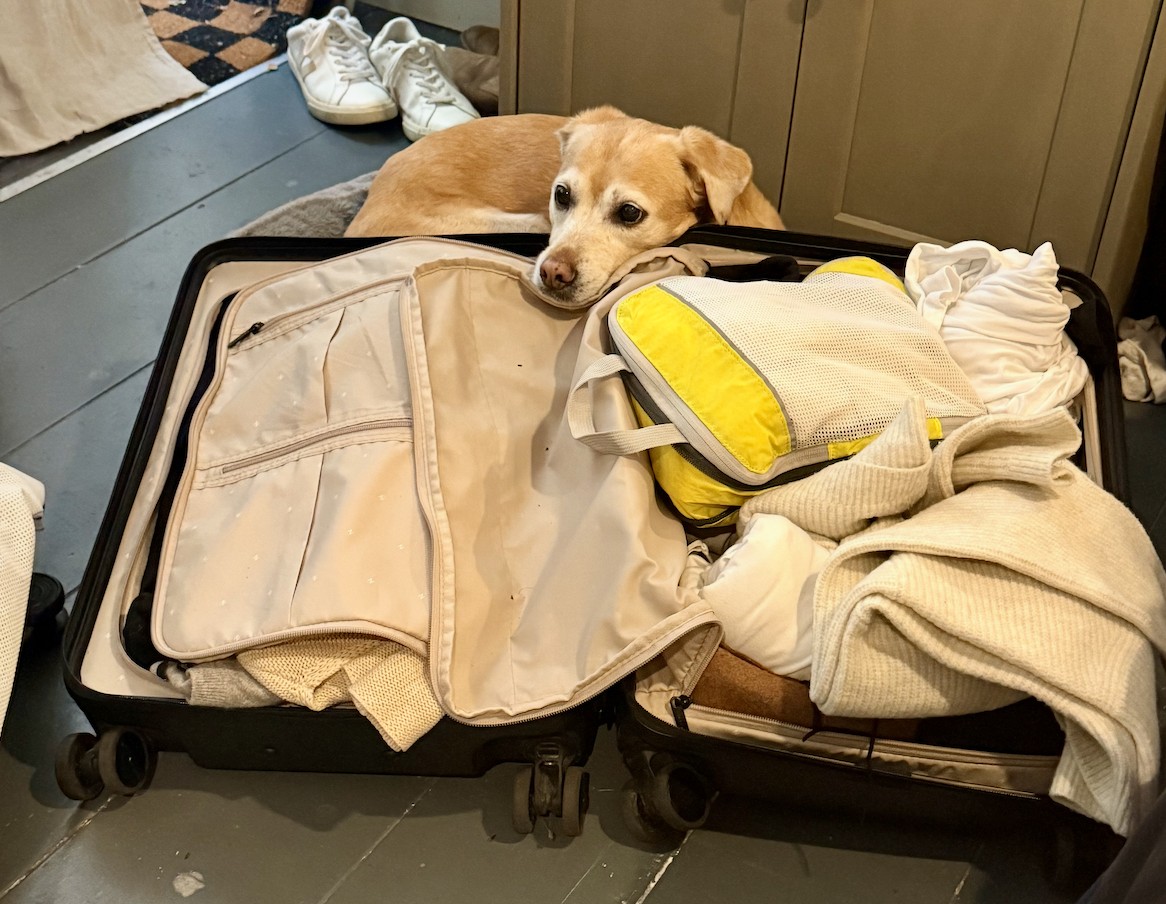
Bindi somehow has almost as much travel gear as we do. Of course there are the obvious things like their bed and food, but we've found quite a few other small things that we throw in her travel bag and have come in handy many times. You can check out our list of essentials here.
Is Europe Easy to Travel With a Dog?
Overall, I've found Europe surprisingly easy to travel around with Bindi, especially in countries like France and Italy. The biggest thing is not assuming that "dog-friendly" means the same thing everywhere.
Check the paperwork before your trip, confirm your accommodation, look up the rules for whatever transportation you're taking, and plan around the handful of activities where your dog won't be able to come with you.
Once you get used to doing those things, they just become another part of planning the trip. I used to think bringing Bindi meant planning an entire vacation around her. Now, most of the time, we plan the trip we want to take and figure out how she fits into it.
After more than 20 countries together, that's become pretty normal.

FAQ: Traveling Europe With a Dog
Is Europe dog-friendly?
In general, yes, but it varies a lot by country. We've personally found France, Italy, England, the Netherlands, and Czechia particularly easy to travel around with a dog, while Spain and Portugal have required a little more planning.
Can dogs stay in hotels in Europe?
Many European hotels accept dogs, but policies vary. Always check for weight limits, pet fees, and whether dogs are allowed in public areas or can be left alone in the room.
Can dogs travel on trains in Europe?
Many European train operators allow dogs, but the rules depend on the company. Some require a separate ticket, carrier, leash, or muzzle.
Can you take a dog on a ferry in Europe?
Yes, many ferry companies allow dogs. We've personally traveled with Bindi on ferries between Italy and Greece as well as shorter routes in Greece and Türkiye, and to Corsica. Depending on the ferry, you may need to book a pet-friendly cabin.
Is it easier to travel Europe with a dog by car?
In my experience, yes. Driving gives you the most flexibility and makes it much easier to carry everything your dog needs. It's usually my preferred option for longer European trips.
What should I pack when traveling Europe with a dog?
At minimum, I'd bring your dog's normal food, water, bowls, bed, waste bags, treats, a towel, and any documents required for the trip. Depending on where you're going, a muzzle, cooling pad, car cover, or life vest can also be useful. These are all the things we pack in Bindi's travel bag.
Can dogs go inside restaurants in Europe?
It depends heavily on the country and the individual restaurant. We've found indoor dining with Bindi incredibly easy in France and Italy, while in countries like Spain and Portugal it's been much more difficult. I never assume a restaurant allows dogs, but in very dog-friendly countries we're often able to bring Bindi inside without a problem.