If there's one thing I can guarantee I'll do when visiting Rome, it's eat a lot of pasta. After all, is there a better place in the world to indulge in a big bowl of perfectly cooked pasta, covered in a rich, cheesy sauce?
One of my favorite things about Italian food is how much it varies from region to region. While you can find pasta just about everywhere in Italy, each region has its own specialties, and Rome is home to some of the country's most famous dishes.
From the deceptively simple cacio e pepe to the incredibly creamy carbonara, Roman pasta is all about taking a handful of good ingredients and turning them into something delicious.
On our most recent trip to Rome, we made it our mission to eat as much pasta as possible, revisiting an old favorite restaurant and discovering a few new ones along the way.
Here are the traditional Roman pastas I've loved, plus a couple of non-traditional ones, and where to get them!
Ivo a Trastevere: Cacio e Pepe and Amatriciana
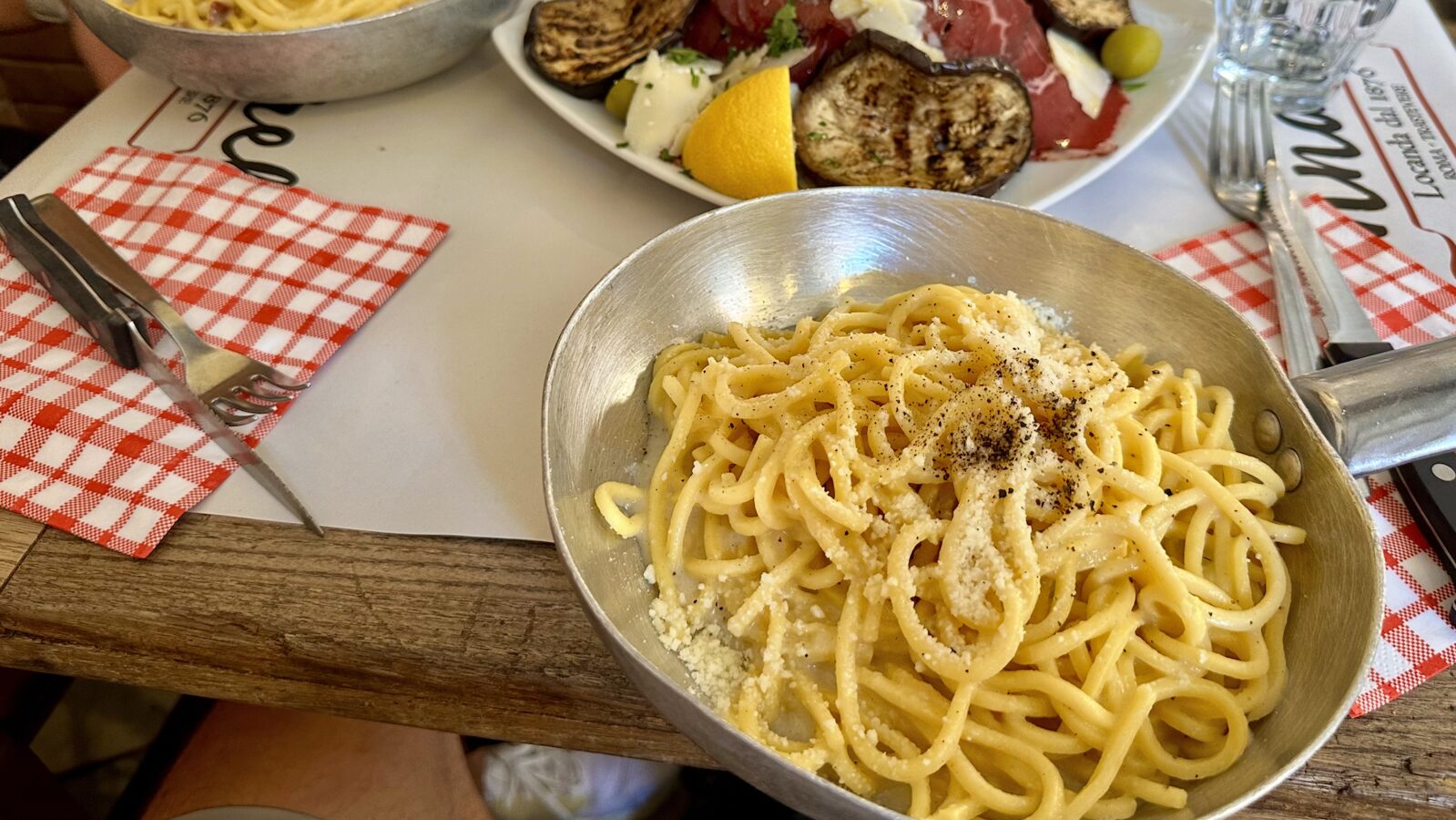
Some meals stay with you long after a trip is over. The cacio e pepe at Ivo a Trastevere was one of those for me. I'd eaten there on a previous visit to Rome and thought about it often enough that I knew I'd have to return for it.
Located in Trastevere, Ivo is a great option for a meal built around the Roman classics. There are two dishes here that I'd particularly recommend.
Cacio e Pepe
Cacio e pepe is one of the classic Roman pastas. It translates to "cheese and pepper," which tells you most of what you need to know about the ingredients. Pecorino Romano, black pepper, and a bit of starchy pasta water come together to make a sauce that's wonderfully creamy without any cream.
It sounds simple, but getting that sauce just right is what makes the dish so good.
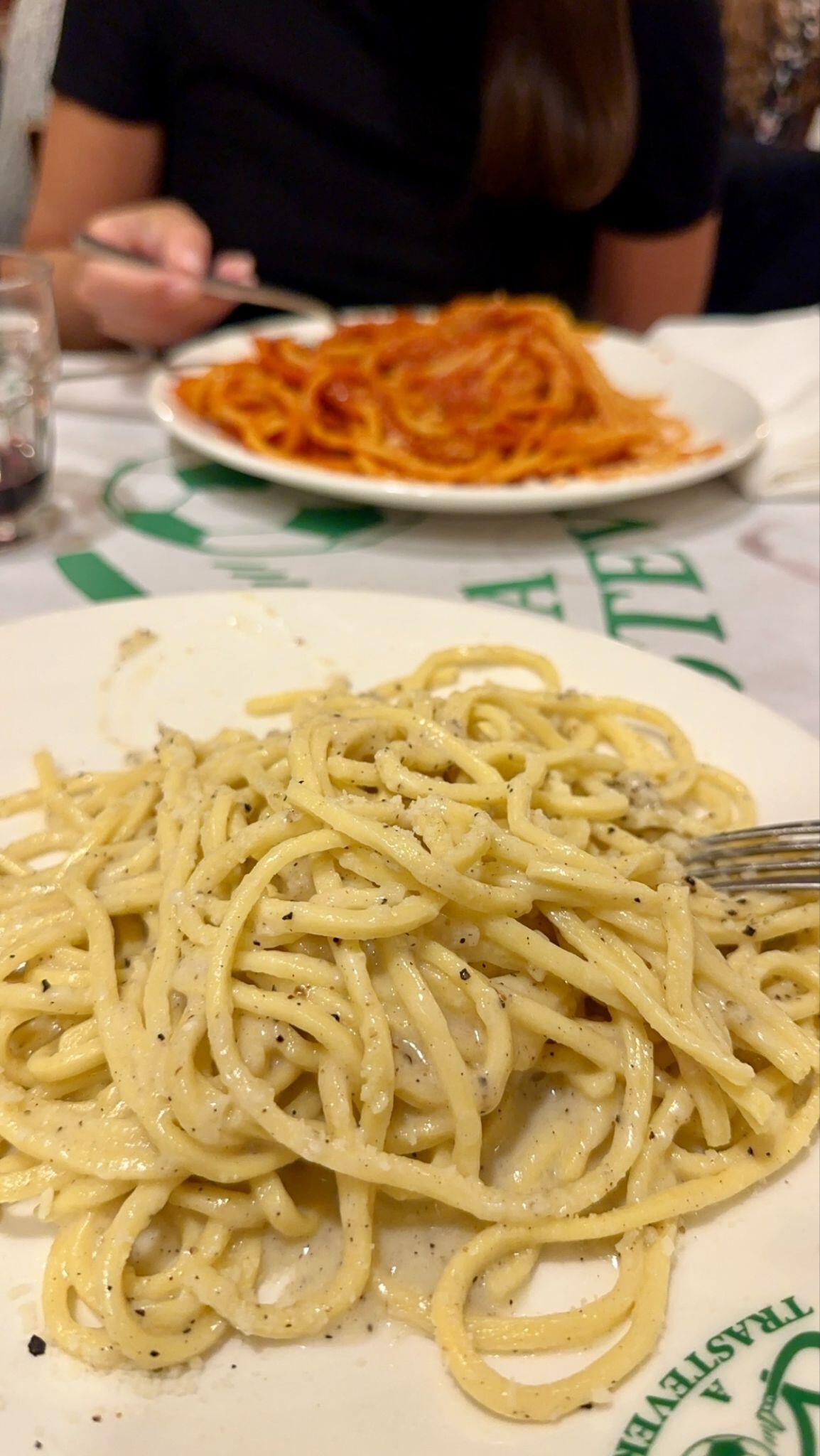
At Ivo, our plate was piled high with pasta, cooked to the perfect al dente texture and coated in a rich sauce that clung to every strand. There was plenty of sharp, salty cheese, balanced by the warmth of the black pepper.
It's the kind of dish that doesn't need anything else added to it. And, thankfully, it was every bit as good as I remembered.
Bucatini all'Amatriciana
Another Roman classic, and another excellent choice here.
The sauce is made with guanciale, tomatoes, and Pecorino Romano. As the guanciale cooks, its fat becomes the base of the sauce, giving it a richness that's balanced by the tomatoes.
What I love about amatriciana is that contrast. You get salty pieces of pork, a little sharpness from the cheese, and enough acidity from the tomatoes to keep the dish from feeling too heavy.
At Ivo, it's served with bucatini, the long, thick pasta with a tiny hole running through the middle. It's a very satisfying plate of food, and a good option when you're craving something tomato-based rather than another cheesy sauce.
Tonnarello: Carbonara Worth Waiting For
Tonnarello is hardly a secret. The queue outside was enough to make that clear when we visited, despite our attempt to avoid it by arriving early.
But I don't think a restaurant's popularity is an immediate reason to dismiss it. Sometimes places become popular because they are actually very good, and that's the case with Tonnarello.
We waited about 20 minutes before getting a cozy table inside. Being happy to sit either indoors or out seemed to help, though I'd still leave some flexibility in your plans rather than expecting to walk straight in.
The dish I'd come for was carbonara, and it was absolutely worth the wait.
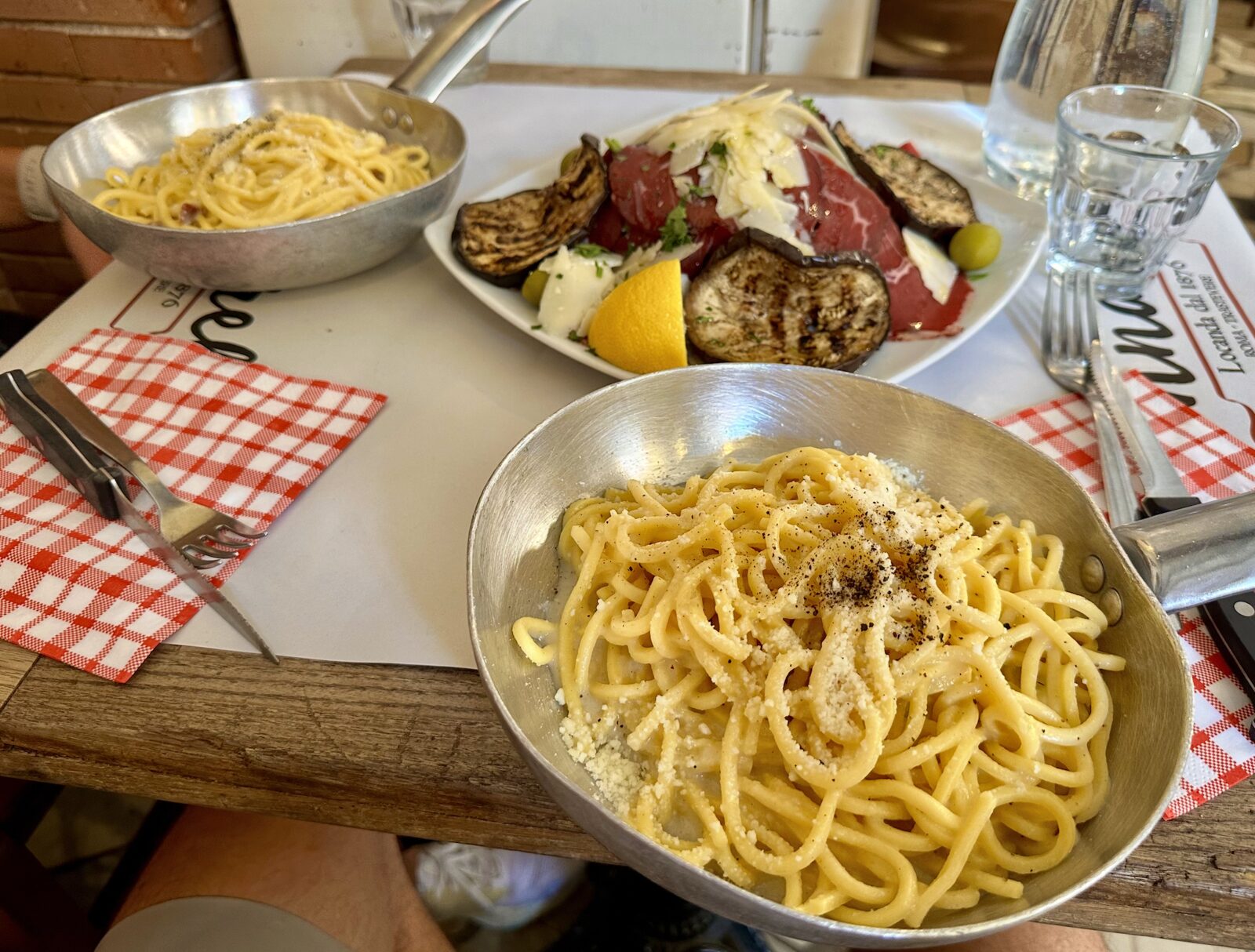
Made with eggs, Pecorino Romano, black pepper, and guanciale, carbonara takes some of the same ingredients as cacio e pepe and turns them into something even richer. The eggs give the sauce its silky texture, while the crispy pieces of guanciale add little bites of saltiness throughout.
I'm always impressed by how creamy a good carbonara can be without any actual cream, and Tonnarello's was a particularly good example. The sauce coated every strand of pasta, with plenty of guanciale mixed through it.
I also loved the presentation, with the pasta served in little pans. It's a small thing, but a pan full of carbonara is such an appealing sight.
Ristorante Controluce: Gricia and Something a Little Different
What I particularly liked about Ristorante Controluce was the mix of dishes on the menu. You could order a traditional Roman pasta or try something that felt completely different, without either seeming out of place.
The restaurant has a calm, local feel, and definitely isn't on the typical tourist trail.
Pasta alla Gricia
Gricia is one of Rome's four classic pasta dishes, alongside cacio e pepe, carbonara, and amatriciana.
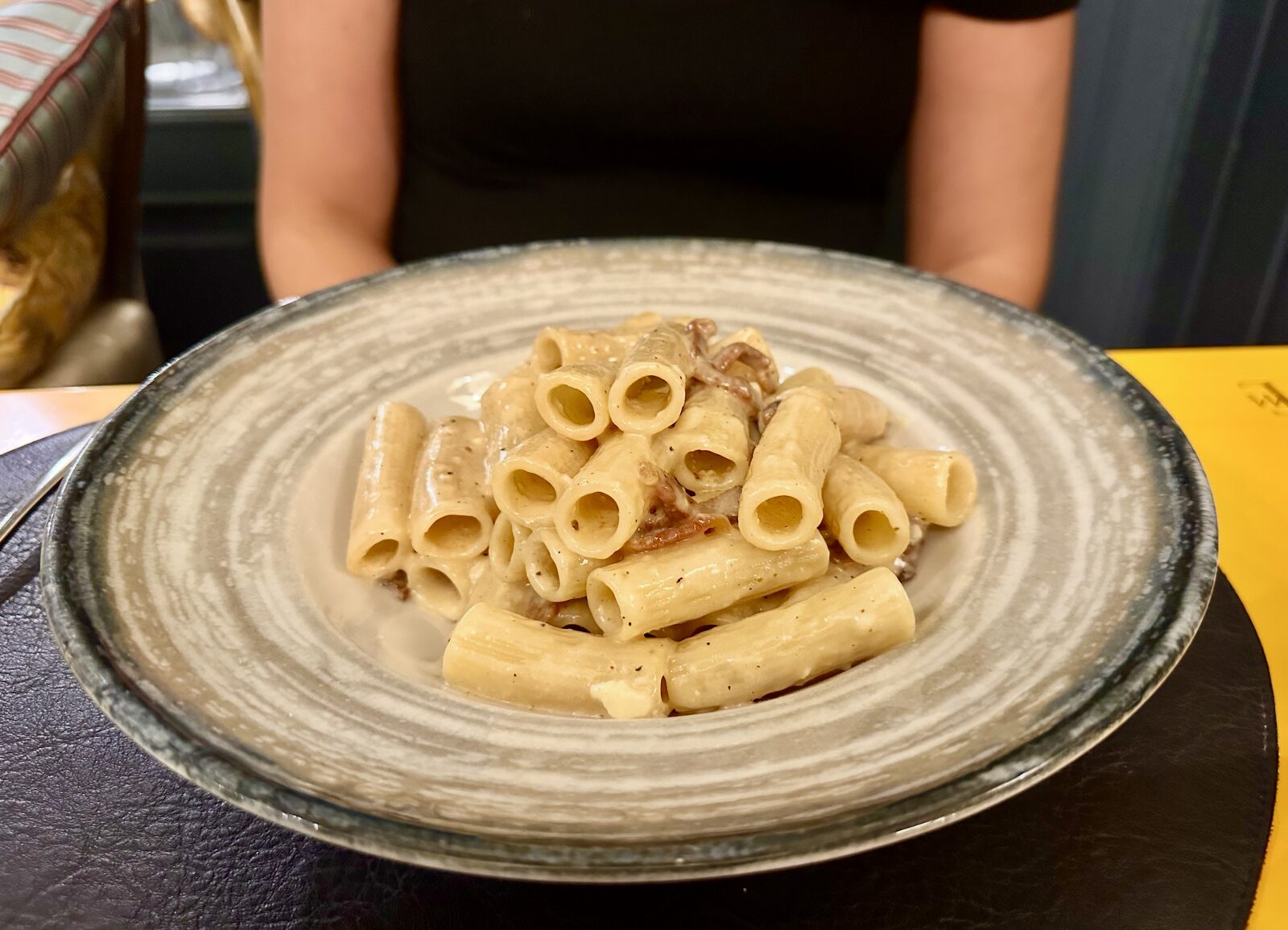
The easiest way to describe it is as cacio e pepe with guanciale, or carbonara without the eggs. It's made with guanciale, Pecorino Romano, and black pepper, with pasta water helping bring everything together into a glossy sauce.
Without eggs or tomatoes, the flavor of the guanciale really stands out. Its rendered fat combines with the cheese to coat the pasta, while the crisp pieces of pork provide a contrast in texture.
The version at Controluce was rich, warming, and full of flavor. It's a particularly good choice if the guanciale is your favorite part of a carbonara.
Smoked Spaghetti with Roasted Red Peppers and Candied Lemon
As good as the gricia was, it was actually the less traditional choice here that stood out the most, smoked spaghetti with a roasted red pepper sauce and candied lemon.
The combination might sound a bit odd, but it totally works! The smokiness of the spaghetti, the sweetness of the peppers, and the citrus from the candied lemon gave it a very different character from the other pastas we'd been eating.
As much as I enjoy ordering the classics in Rome, dishes like this are a reminder to leave room for something unfamiliar. Controluce was a great place to do both, especially when one person wanted a traditional Roman pasta, and the other wanted to branch out.
Matricianella: Gnocchi alla Romana and Truffle Pasta
Matricianella is somewhere I'd happily return to for either of the dishes we ordered. We went specifically for the gnocchi alla Romana, but the truffle pasta turned out to be just as much of a reason to visit.
Choosing between them would be difficult, so my recommendation is to do what we did and try both.
Gnocchi alla Romana
If you're expecting the little potato dumplings usually associated with gnocchi, gnocchi alla Romana will come as a surprise.
This version is made with semolina, shaped into rounds, and layered in a baking dish. It's topped with butter and cheese, then baked until golden and bubbling.
It's not a bowl of pasta in the usual sense, but it's a Roman specialty I wouldn't leave off your list. The semolina gave the gnocchi a slightly coarse texture that contrasted with the creamy, buttery topping. There was plenty of cheese, along with a golden surface that made each bite even better.
We ate it on a rainy evening in Rome, which felt like exactly the right setting for something so warm and comforting. Though I certainly wouldn't need bad weather as an excuse to order it again.
Truffle Pasta
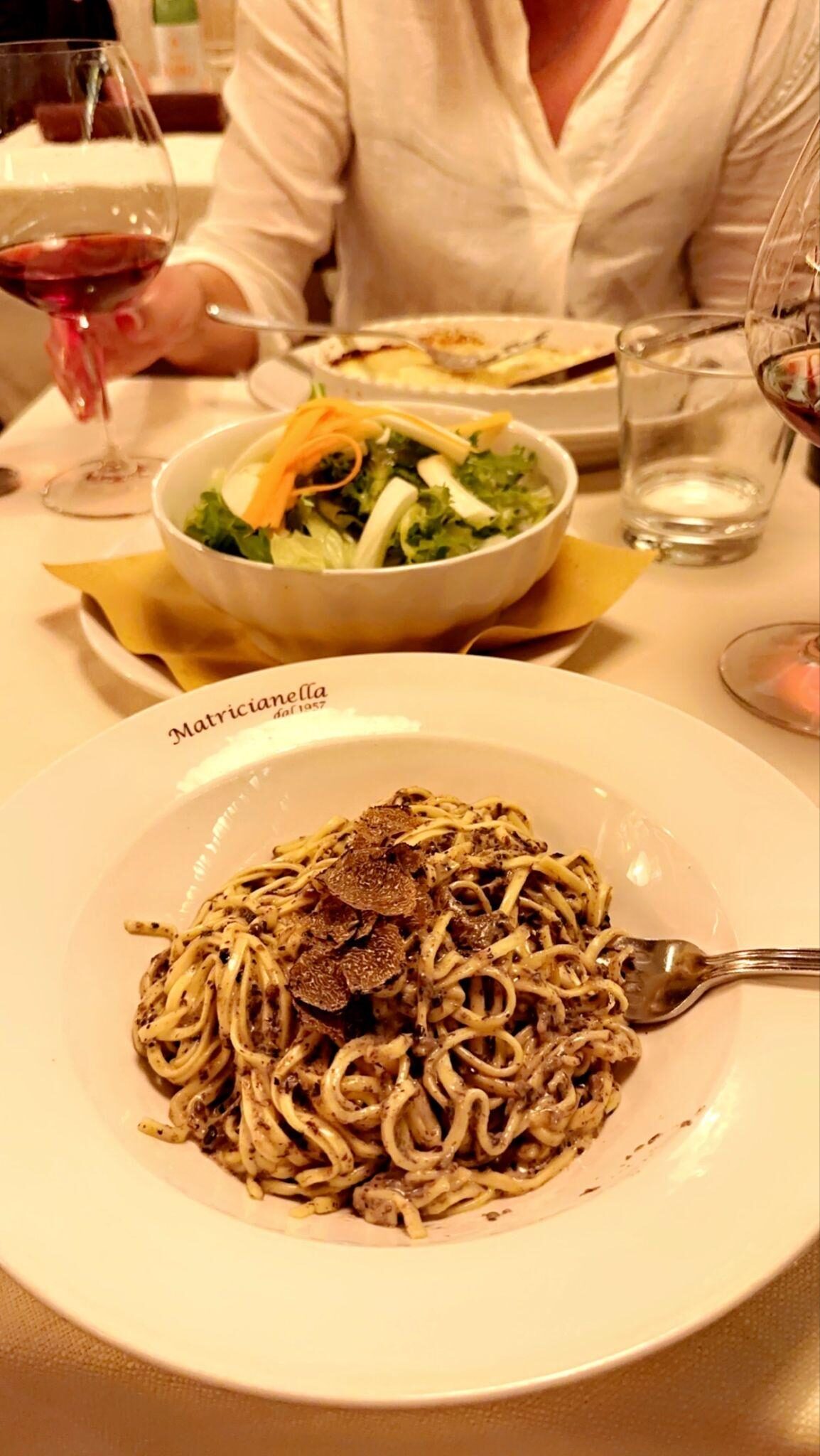
As much as we enjoyed the gnocchi, the truffle pasta deserves just as much attention. I think we can safely say it was the best truffle pasta we've ever had.
The truffle flavor was pronounced without taking over, and the sauce was creamy but light enough to let you really taste it. The pasta itself had just the right amount of bite. Nothing felt excessive, and nothing needed adding.
It was one of those dishes where everything worked, and one of the meals I still think about when someone mentions Rome.
A Note on Eating in Rome with a Dog
Bindi joined us at the restaurants we visited and was warmly welcomed, often with a fresh bowl of water. She would probably have preferred her own bowl of pasta, but she seemed happy enough to keep us company.
That was our experience rather than a guarantee of every restaurant's policy, so it's worth checking when booking, particularly if you're planning to sit indoors.